On this page
If you live in Mexico on a foreign passport, the usual crypto onboarding advice breaks quickly. Mexican exchanges want a CURP for peso deposits, your Mexican bank may not be set up yet, and your money may still sit in a US or European account. CEX.IO is one of the international platforms that sidesteps most of that: you verify with a passport and proof of address, then pay with a card or phone wallet.
The trade-off is that CEX.IO has no peso rails at all. This review looks at what that means in practice for three kinds of reader: the expat with a US-dollar card, the Mexican resident with a peso card, and anyone who wants to cash out to a Mexican bank later.
What CEX.IO is and who runs it
CEX.IO started in London in 2013. Its early history is tied to GHash.IO, one of the first cloud-mining services, and the company CEX.IO LTD was registered in November of that year. It later dropped mining and focused on the exchange: crypto against dollars, euros and pounds, an order book for active traders and an instant-buy flow for card payments. You can check current terms on its official site.
The group now runs through several entities: CEX.IO Corp. in the United States, CEX.IO Markets UK Limited in Britain, CEX.IO Limited in Gibraltar and CEX Markets Ltd in Cyprus. Which entity serves you, and which rules apply, follows the country of residence you declare at verification. If you live in Mexico, say so and use a Mexican proof of address. Registering with an old US address you no longer live at is how accounts get frozen at review time.
Does CEX.IO work in Mexico?
Yes, with caveats. CEX.IO publishes a list of 30 countries and territories it does not serve, including Canada, Japan, India, Venezuela, Cuba, Honduras, Nicaragua, Puerto Rico and Russia. Mexico is not on it. We found no CEX.IO page that mentions Mexico by name and no peso support.
There is some history here: in 2015 CEX.IO announced a deal with AstroPay to accept local currencies in Mexico and other Latin American countries. We could not confirm that this still exists, and it very likely does not. The only fiat currencies the platform names today are USD, EUR and GBP.
Paying from Mexico: dollars, not pesos
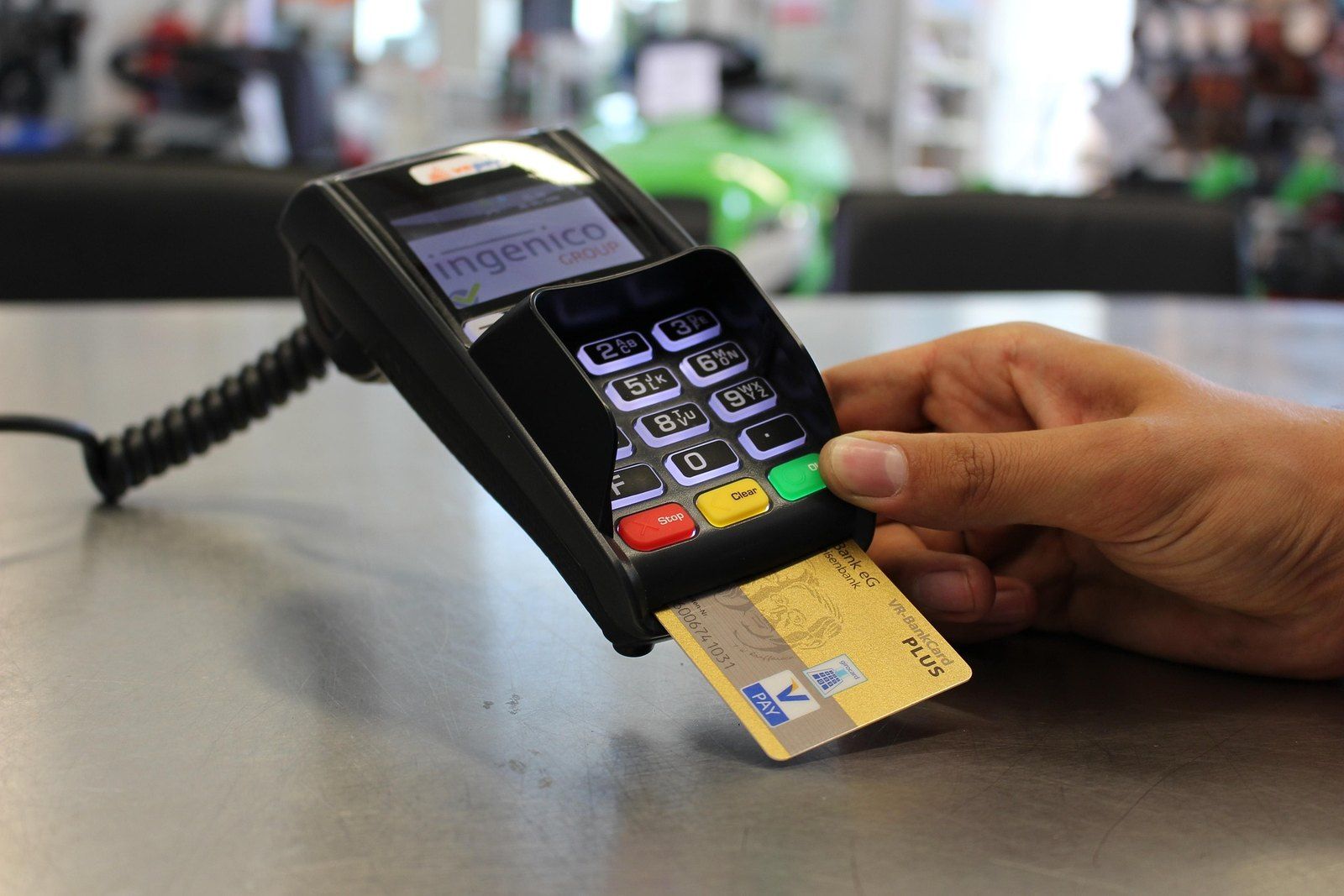
The methods that apply to someone in Mexico are a Visa or Mastercard (debit or credit, from USD 20), Apple Pay or Google Pay (USD 20 to 1,000 per day, depending on the device) and SWIFT transfers in dollars. There is no SPEI, no OXXO cash, no CoDi and no Mercado Pago. PayPal and Venmo are listed only for US accounts.
How much that matters depends on your card:
- A US-dollar card (from a US bank, a fintech like Wise with a USD balance, or a Mexican dollar account) pays the charge as is. No currency conversion, so no bank FX fee on top.
- A peso card from BBVA, Banorte, Santander or a neobank gets converted by your bank at its own exchange rate, and many banks add a foreign-transaction fee. CEX.IO does not set that fee; your card agreement does.
Fees, worked out in pesos
The official buy page lists a card deposit fee of 0.49% to 4.99% plus a service charge. It does not explain where inside that range you land or how large the service charge is. Plan for the high end until the confirmation screen shows the real number.
Here is a USD 100 purchase at an illustrative rate of MXN 18.50 per dollar. Your bank's actual rate on the day will differ.
| Item | Low case | High case |
|---|---|---|
| Purchase | USD 100 (≈ MXN 1,850) | USD 100 (≈ MXN 1,850) |
| CEX.IO card fee | 0.49% ≈ MXN 9 | 4.99% ≈ MXN 92 |
| Service charge | Not published | Not published |
| Bank FX fee (peso cards only) | Per your card | Per your card |
At the published worst case, the card fee alone is about MXN 92 on 1,850. For comparison, a peso SPEI deposit to a local exchange and an order-book buy costs 0.13% to 0.78% on Bitso, roughly MXN 2 to 14 on the same amount. You pay for speed and for not needing a Mexican bank account.
On CEX.IO's own order book, fees are maker/takerA maker places an order that waits on the book; a taker fills an order that is already there. Takers usually pay more. tiers on 30-day volume. Secondary sources quote 0.15% maker and 0.25% taker below USD 10,000 a month, falling to 0% and 0.10% above USD 5 million. We could not confirm those on the official fee page, which did not load in our check, and the spreadThe gap between the price you are quoted and the actual market price. A cost that often does not show up as a separate fee. on instant buys is not published.
Estimates using published fees: Bitso 0.13–0.78% (SPEI), Mercado Pago 1.5% + store fee (OXXO), CEX.IO 0.49–4.99% (card), CoinFlip 6% + MXN 50 (ATM). Excludes spread and network fees.
Limits and verification
KYCKnow Your Customer: the identity checks exchanges must run under anti-money-laundering rules. at CEX.IO means a government ID or passport plus proof of address, such as a bank statement or utility bill. For a foreign resident in Mexico, a CFE electricity bill or a Mexican bank statement in your name usually does the job; a lease alone may not. Card payments also require verifying the card itself. Customers are screened against LexisNexis WorldCompliance and Refinitiv World-Check One.
New accounts get a fixed ceiling: for the first three months after ID verification, deposits top out at USD 1,000 a day and USD 3,000 a month. Standard limits apply after that. That is plenty for regular small purchases and tight if you planned to move a lump sum in week one.
Cashing out to a Mexican bank
CEX.IO cannot pay pesos to a CLABE. Your realistic routes are:
- Sell to USD and withdraw to a card or by SWIFT. Works neatly if you keep a dollar account, in Mexico or abroad.
- Send crypto to a peso exchange. Move BTC or USDT to Bitso or Binance, sell for pesos and withdraw by SPEI. This is the common route for people who earn or spend in pesos.
- Sell peer to peer to a buyer who pays you by SPEI, using escrow and the precautions in our P2P guide.
On the second route, check the network before you send. USDT sent on a network the receiving exchange does not support can be lost for good.
Coins and the Pi IOU
CEX.IO lists the major coins (bitcoin, ether, USDT, XRP, Solana and many more) and one product that gets a lot of attention in Mexico: Pi Coin traded as an IOU. An IOUFrom 'I owe you': a claim on an asset that has not been delivered yet. You hold an internal balance, not the token on its own blockchain. is not PI on the Pi Network blockchain. It is an internal balance standing in for tokens CEX.IO says it will deliver later.
You buy it through instant buy with presets of USD 300, 500 or 1,000 or a custom amount, by card, bank transfer or by converting crypto. The product page shows no fees, no redemption terms and no risk disclosure. Context matters: the Pi Core Team says it never authorized IOU trading, Pi's open mainnet launched in February 2025, and exchanges such as OKX and Bitget list the real token. With an IOU, you are relying entirely on CEX.IO's promise. Read our Pi Network guide to compare both routes.
If you are comfortable holding a claim rather than the on-chain token, you can buy it with a card or with crypto.
Security and regulatory footprint
CEX.IO publishes more regulatory detail than most exchanges that serve Mexico. In the US, CEX.IO Corp. is registered with FinCEN as a Money Services Business, NMLS ID 1804170, and its legal page lists money transmitter licenses in 38 states plus Washington, D.C. One inconsistency: the bitcoin buy page says 36 states plus D.C., so the company's own pages disagree. The same list notes that the Louisiana and Tennessee licenses do not cover virtual-currency transmission.
In the UK, the firm announced an FCA registration under the anti-money-laundering regulations in March 2026. In Gibraltar it was granted a DLTDistributed Ledger Technology, the technology behind blockchains. Gibraltar issues a specific licence for firms that use it. provider licence (authorisation FSC0686FSA) in 2019, and in Cyprus a CySEC licence numbered 381/19 the same year. We could not verify whether those two are still active, as we did not check the regulators' registers. CEX.IO also cites a Lithuanian VASP registration, but that regime expired on 31 December 2025 and we found no MiCA authorisation replacing it. Its PCI DSS Level 1 certification covers card-data handling; it is a security standard, not a license.
CEX.IO has no Mexican registration. Neither does any other exchange for its crypto business: Mexico's rules do not currently offer that license to anyone, as we explain in is crypto legal in Mexico. If something goes wrong, your complaint goes to the platform and to the regulator of the entity serving you, not to CONDUSEF.
Pros and cons
- Takes Visa, Mastercard, Apple Pay and Google Pay from USD 20, verified with a passport
- With a US-dollar card there is no FX conversion on the charge
- Publishes checkable license numbers: NMLS 1804170 and US state money transmitter licenses
- New-account limits are stated up front: USD 1,000/day and 3,000/month for three months
- Sells Pi as an IOU by card
- Peso cards are charged in USD, so your bank may add an FX fee
- Card fee of 0.49% to 4.99% plus an unitemized service charge
- No SPEI, no OXXO and no peso withdrawal to a CLABE
- Pi IOU page lists no fees or redemption terms
- No Mexican authorization; current status of the Gibraltar and Cyprus licenses is unconfirmed
Who CEX.IO suits
It fits expats, remote workers and snowbirds who earn or hold dollars, because the USD billing stops being a cost. It also fits anyone who wants a card purchase without a Mexican bank account or CURP, and people who want Pi exposure and knowingly accept the IOU model.
It is a weaker fit if you get paid in pesos, buy every quincena and care about every peso of fees, or need to withdraw to a Mexican bank often. In those cases a peso exchange with SPEI costs less.
Verify your ID, choose the amount and check the dollar total before you confirm.
Alternatives in Mexico
If you have a CURP (temporary and permanent residents get one), Bitso is the local benchmark, with free SPEI deposits and withdrawals and 12 markets against MXN. Binance takes pesos through its Mexican payments arm Medá and runs one of the busiest peso P2P markets. Kraken accepts SPEI and converts it to dollars. If you are torn between the big two, see Bitso vs Binance, and for every platform side by side, go to the reviews hub.
Frequently asked questions
Can I use CEX.IO while living in Mexico?
Mexico is not on CEX.IO's list of 30 unsupported countries and territories, so residents can sign up. CEX.IO does not name Mexico on any page we found and offers no peso support. You pay by card, Apple Pay, Google Pay or SWIFT, and every card charge is billed in US dollars.
Is CEX.IO legit?
It has run since 2013 and publishes license numbers you can check: a FinCEN Money Services Business registration (NMLS 1804170), money transmitter licenses in dozens of US states and a UK FCA registration. Like every other exchange serving Mexico, it holds no Mexican authorization for crypto.
What does CEX.IO charge for card purchases?
The official buy page lists a card deposit fee of 0.49% to 4.99% plus a service charge that is not itemized. If your card is in pesos, your bank also converts the dollar charge and may add a foreign-transaction fee. With a US-dollar card, that bank conversion step disappears.
How do I cash out from CEX.IO to a Mexican bank account?
There is no MXN withdrawal. You can withdraw dollars to a card or by SWIFT, or send your crypto to an exchange with SPEI, sell it for pesos and transfer to your CLABE. Our cash-out guide walks through the options.
What is the Pi IOU on CEX.IO?
It is an internal balance that stands in for Pi Network tokens CEX.IO says it will deliver later. It is not PI on the Pi blockchain. The product page lists no fees or redemption terms. See our Pi Network guide before buying.