On this page
Querétaro has quietly become one of Mexico's most international industrial cities. Safran employs more than 3,300 people across its engine and landing-gear operations here, and Bombardier and Spain's ITP Aero keep expanding. Microsoft announced a cloud region with data centres in the state, and AWS ran a Local Zone in Querétaro even before it opened its Mexico region in January 2025. Add the nearshoring plants along the highway to Mexico City and you get a steady stream of engineers, plant managers and IT specialists arriving on work visas.
Many of them hold some crypto already, and the first question is often where the bitcoin ATM is. The answer: there are about two, according to the CoinATMRadar figures UPay published in May 2026. This guide covers both, then explains the cheaper routes that open up once you're on a Mexican payroll.
The two machines
CryptoFlamingo at H-E-B Juriquilla. This is the one its operator confirms. It sits in the ATM area of the H-E-B supermarket at Boulevard de las Ciencias 2060, in Juriquilla, on the city's northern side. CryptoFlamingo is based in Mexico City, also runs machines in Cancún, Monterrey and the capital, and says its ATMs both buy and sell bitcoin.
Cryptobox, location less certain. BTC Map, the community-maintained map, shows a Cryptobox machine inside the city. Swapzone separately lists an unbranded ATM at Prolongación Bernardo Quintana 450, Colinas del Parque. They may be the same machine. We couldn't confirm either way.
What the ATM costs
CryptoFlamingo publishes a 7% margin on both buys and sells, built into the price on screen, with a minimum of MXN 1,000. Its site says it verifies users by text message and name. That 7% buys you speed and cash-in without a bank account. For anyone with a payroll account, it's an expensive convenience. Try the calculator with the fee you see on the machine.
Getting set up when you relocate for work
Your route to cheap crypto purchases runs through the same paperwork as the rest of your move.
- Residency. Most foreign employees enter on a work visa and swap it for a temporary resident card. That card usually carries your CURPClave Única de Registro de Población: Mexico's 18-character personal ID code, issued to citizens and to legal residents., the code Mexican financial apps ask for.
- RFC and payroll. Your employer will need your RFCRegistro Federal de Contribuyentes: your Mexican taxpayer ID, issued by the SAT. to put you on payroll and withhold income tax. Being on a local payroll usually goes hand in hand with Mexican tax residency.
- A Mexican bank account. Payroll goes into a local account, which comes with an 18-digit CLABE for transfers.
- An exchange account. Sign up with a Mexican exchange, verify with your passport, residency card and CURP, and you get a CLABE in your name for peso deposits.
- Buy by SPEI. Send pesos from your banking app by SPEI, Banco de México's instant transfer system. Deposits are usually free and arrive within minutes, and trading fees are a fraction of the ATM's margin.
The whole deposit process is in our SPEI bank transfer guide. One rule catches newcomers out: exchanges accept SPEI only from accounts in your own name, so don't pay in from a colleague's or your company's account.
Before your paperwork is done, use the card from your home bank. If it's a US card and the platform charges in dollars, there's no currency conversion. Some issuers may code crypto as a cash advance, so check first. Details are in our guide to buying crypto with a card in Mexico.
Buy bitcoin with Visa or Mastercard in minutes. The platform is registered with FinCEN in the US as a money services business (NMLS 1804170) and with the UK FCA.
If part of your pay arrives in dollars or euros
Some assignees are paid partly abroad, in a home-country account. You have two clean options. Buy crypto directly from that home account or card, or convert to pesos, move the money into your Mexican account and buy by SPEI. Either way, compare the exchange rate you get with Banco de México's daily FIX rate. Over a two- or three-year assignment the gap adds up.
If you'd rather hold dollar value than bitcoin, dollar stablecoinsCryptocurrencies designed to hold a steady value, usually pegged 1:1 to the US dollar. such as USDT are popular in Mexico. They carry their own risks, from the issuer to the platform holding them. Our USDT explainer covers which networks to use.
Simple habits for salaried buyers
- Buy in instalments. A fixed amount every payday, known as dollar-cost averagingBuying a fixed peso amount on a schedule regardless of price, which smooths out volatility., beats putting a whole bonus in at once.
- Use limit orders. Placing your own price on the exchange's order book avoids the spreadThe gap between the buy and sell price on an instant purchase. It works like a hidden fee. built into instant buys.
- Keep your payslips. Exchanges can ask where large deposits came from. Payroll receipts are the easiest proof.
- Move savings to self-custody. Anything you'd hate to lose belongs in a wallet you control. Our wallet guide compares options available in Mexico.
The local scene
The Bitcoin Querétaro group has held meetups in the historic centre. Its fourth, at Public House Social Club on Calle Venustiano Carranza, featured a talk on privacy and one on bitcoin ATMs in Mexico by Pablo Urquiza, CryptoFlamingo's CEO. The invitation said the previous meetup drew people from Guadalajara, Puebla and San Miguel de Allende, so Querétaro works as a meeting point for the Bajío. A later session covered self-custody security. Talks have been in Spanish, but small meetups are usually happy to switch languages for a newcomer.
Club Zcash QRO runs workshops on financial privacy, and Barefoot Robot lists Querétaro bitcoin meetups on Luma. Check Meetup and Luma for current dates.
There's little merchant adoption to speak of. BTC Map shows about 14 entries in the area, but 9 are Elektra stores bulk-added years ago that we couldn't confirm. The rest include a torta shop, a car-detailing service and a residential development.
The wider Bajío
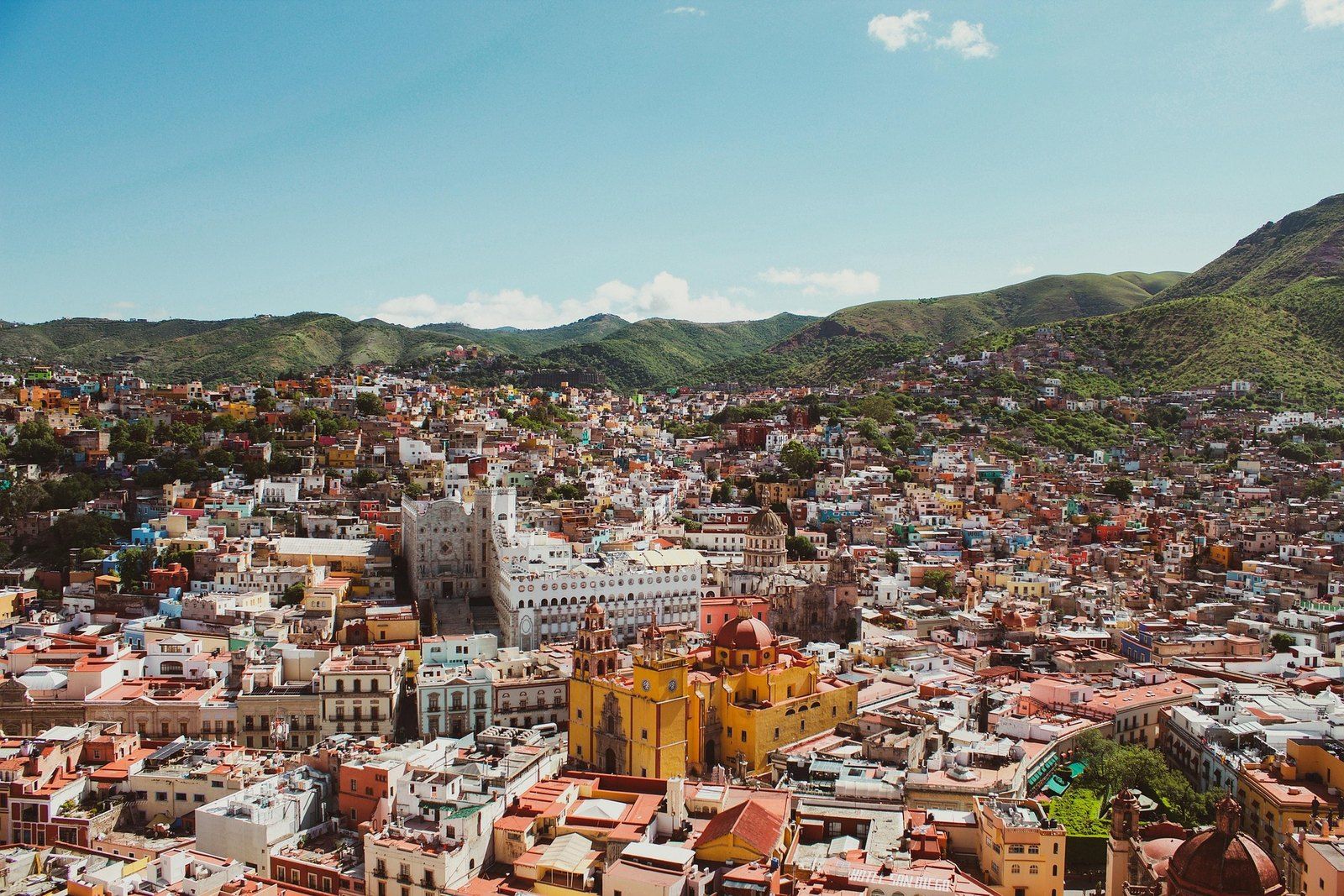
Querétaro is the only Bajío city with bitcoin ATMs in the counts we found. San Miguel de Allende, home to a large community of American and Canadian retirees, doesn't appear in them. Neither do León or Guanajuato city, the colourful hillside town in this guide's photo. Expansión reported a machine in Silao, near Bajío international airport, in 2022, and we couldn't confirm it's still there. If you live in Guanajuato state, the online routes are the realistic option. For a bigger ATM network, Guadalajara is about four hours west by road, and our Guadalajara guide covers it.
Staying safe
At the machine, make sure the QR code you scan is your own wallet's, and don't accept "help" from strangers. If you sell for cash, count the notes before you walk away. Away from the ATM, the risk newcomers meet most is social: a friendly contact on a dating app or in an expat chat group who mentions a trading platform with steady weekly returns and offers to help you open an account. Guaranteed returns are the signature of a Ponzi scheme, and a legitimate exchange never asks you to deposit to a person. Our crypto scams guide lists the patterns we see in Mexico, and you can check any financial firm in CONDUSEF's SIPRES registry.
Cashing out and taxes
The Juriquilla machine can pay you pesos in cash at roughly the same 7% margin. With a Mexican account, selling on an exchange and withdrawing by SPEI costs a fraction of that. Our guide to selling crypto in Mexico compares routes for larger amounts.
On taxes, being on a Mexican payroll usually makes you a Mexican tax resident. Your employer's withholding doesn't cover crypto gains, which you generally declare in your annual return. Americans remain taxable in the US on worldwide income too. Read our crypto taxes guide and get advice from an accountant who works with expats.
Registration is free. Verify your identity now and decide later how much to buy.
For the national picture, see our bitcoin ATM guide for Mexico or browse all city guides.
Frequently asked questions
Where is the bitcoin ATM in Querétaro?
The one its operator confirms is CryptoFlamingo's machine in the ATM area of the H-E-B supermarket at Boulevard de las Ciencias 2060, Juriquilla. BTC Map also shows a Cryptobox machine in the city, and Swapzone lists one at Prolongación Bernardo Quintana 450, Colinas del Parque. These may be the same machine, so check before you go.
How much does the Querétaro bitcoin ATM charge?
CryptoFlamingo publishes a 7% margin on buying and selling, already included in the on-screen price, with a minimum of MXN 1,000 per transaction. On MXN 5,000 that's about MXN 350, plus the Bitcoin network fee.
I just moved to Querétaro for work. Can I use Mexican exchanges?
Usually, once you have temporary or permanent residency. Your residency card typically shows a CURP, which Mexican exchanges ask for to accept peso deposits by SPEI. Until then, buying with the card from your home bank is the simplest route.
Do foreign employees in Mexico pay tax on crypto gains?
If you're a Mexican tax resident, which is common for people on a local payroll, gains on selling crypto are generally declared in your annual return, separately from the tax your employer withholds. Your home country may also tax you. Read our crypto taxes in Mexico guide.
Is there a bitcoin ATM in San Miguel de Allende or León?
We found none. San Miguel de Allende doesn't appear in the CoinATMRadar count we cite, and there's no listing for León or Guanajuato city. Expansión reported a machine in Silao, near Bajío airport, in 2022, but we couldn't confirm it still operates.